
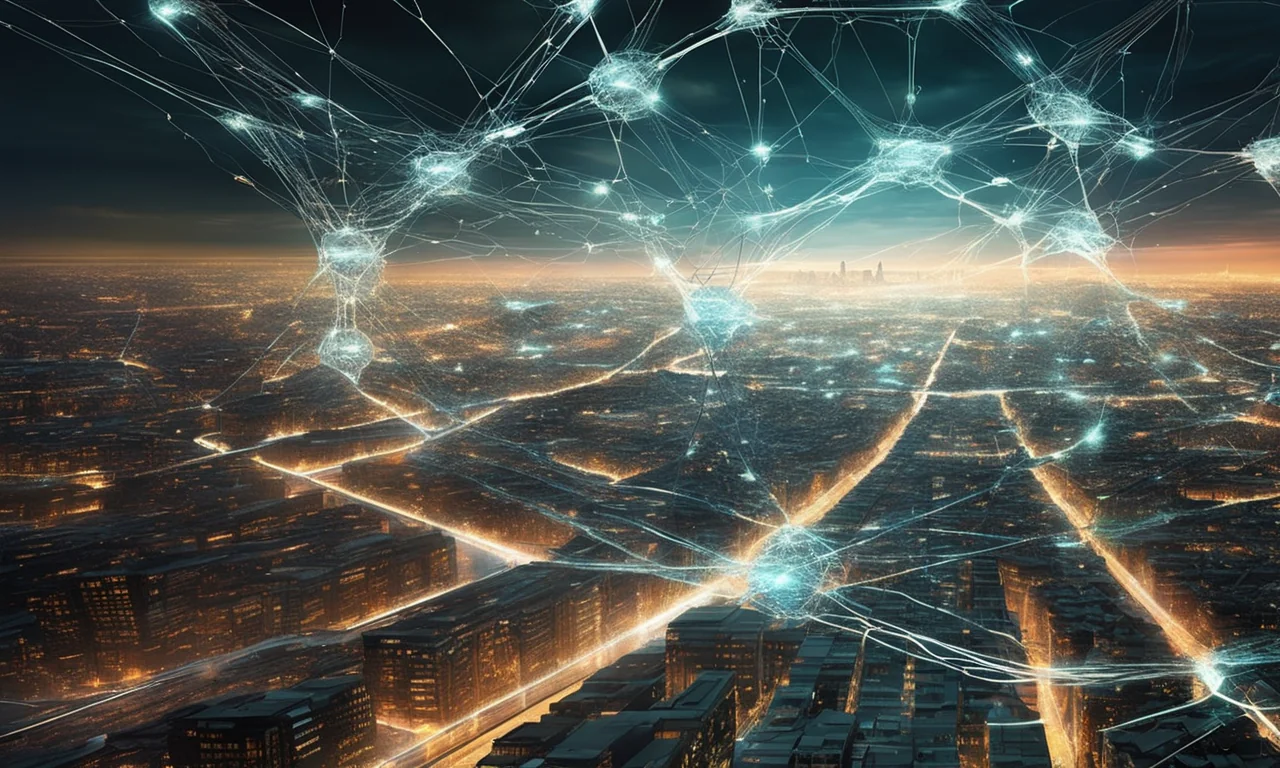
Artificial Intelligence Drives Major Shifts in Urban Mobility and Business Automation
The rapid integration of intelligent agents is transforming daily tools, infrastructure, and ethical standards.
Today's Bluesky conversations on artificial intelligence paint a vivid picture of a technology both omnipresent and deeply debated, from the tools we use daily to the invisible impacts shaping our world. As AI's influence expands into browsers, business workflows, legal checks, environmental systems, and even city transport, users and technologists alike are reevaluating what “intelligence” really means in the products and services they depend on.
AI Integration: Beyond the Hype in Everyday Tools
Much of the day's discussion centers on how artificial intelligence is increasingly bundled into applications, sometimes with underwhelming results. The thoughtful analysis by Sam Clemente questions whether so-called AI browsers actually deliver on their promise, suggesting that the best advances come from seamless integration with other productivity platforms rather than just adding AI for its own sake. Meanwhile, debates on device-level AI integration continue, as seen in the Flipboard Tech Desk's report regarding user concerns over unremovable generative AI software in smart TVs, highlighting a growing tension between innovation and user autonomy.
"Maybe some people don't want unremovable generative AI software installed on their TV."- @techdesk.flipboard.social.ap.brid.gy (9 points)
Practical applications are also evolving, with businesses urged to adopt intelligent AI agents that automate and scale operations. Tools like GitHub Copilot, discussed in the context of vibe coding, are reshaping software development, making the creation and refinement of apps faster and more collaborative. This trend points toward an era where smart agents and agentic models are not just novelties but central to productivity and workflow innovation.
AI's Societal Footprint: Environmental Costs and Ethical Burdens
Concerns about AI's impact extend well beyond the interface, with sharp scrutiny on the technology's environmental and ethical consequences. Robert Eriksson's commentary, referencing recent research on AI's carbon and water consumption, draws a direct line between the resource demands of data centers and those of major cities, challenging the sector to reckon with its growing footprint. The ripple effects of this resource consumption are felt globally, as highlighted by the accompanying image and statistics.
"AI created as much carbon pollution this year as New York City and guzzled up as much H2O as people consume globally in water bottles! ⚡+💧=🏭"- @roberik.bsky.social (3 points)
Ethical debates are also intensifying, especially as AI infiltrates high-stakes domains like medicine and law. Shibley's post referencing the GenAI verification burden calls attention to the significant effort required to verify AI-generated outputs, particularly in areas where mistakes could be catastrophic. Satirical reflections such as “The Scroll That Refused Spectacle” echo the need for literacy and caution in how AI is adopted and understood, especially as its role in education and ethics grows ever more prominent.
"For every 1 hour hallucinating, you need 2 hours checking. I dread to think what 'artificial intelligence' will do to real-life medical decision-making."- @drshibley.bsky.social (2 points)
Intelligent Automation and Urban Innovation
Automation powered by AI is finding new momentum in both business and public infrastructure. The launch of the autonomous tram in Moscow showcases how driverless vehicles, robotics, and artificial intelligence are converging to redefine urban mobility, sparking conversations about safety, efficiency, and public acceptance. On the enterprise front, comprehensive AI agent development, as illustrated by Osiz Technologies, is accelerating the automation of customer support, data analysis, and more, promising enhanced decision-making and personalized experiences.
Innovation isn't limited to mainstream platforms, either. The intersection of gaming, copyright, and AI is explored in Michael Emory's Linux-focused post, which hints at a future where AI helps optimize gaming experiences while navigating complex legal and creative landscapes. The increasing deployment of AI in healthcare, as referenced by medical diagnostics and genetic research, further demonstrates the technology's potential to transform both individual lives and entire systems.
Every subreddit has human stories worth sharing. - Jamie Sullivan