
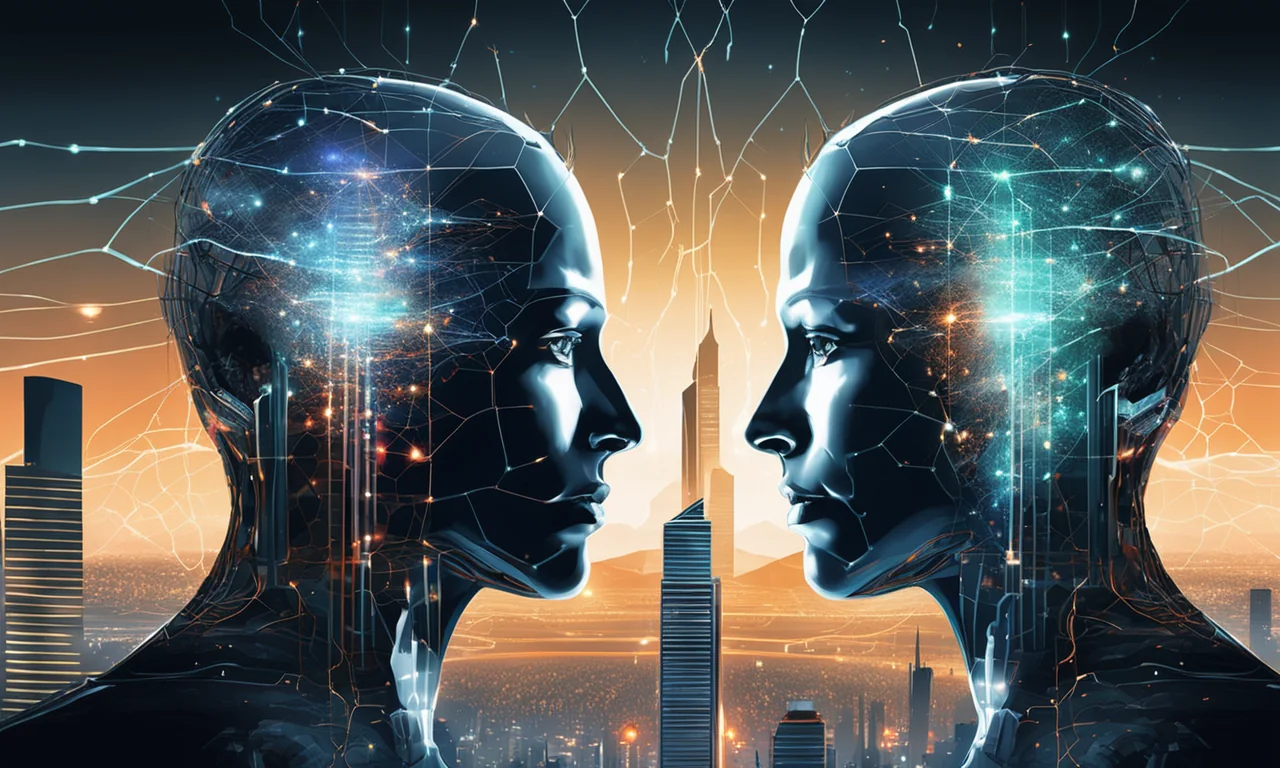
Global AI Governance Models Intensify Competition for Leadership
The divergence between strict and liberal regulatory approaches is shaping innovation and trust in artificial intelligence.
Today's discussions on Bluesky's #artificialintelligence and #ai threads reveal a rapidly maturing landscape shaped by governance tensions, new scientific milestones, creative experimentation, and persistent questions about trust. Community posts underscore the intersection of technological advancement and societal adaptation, as stakeholders consider both the promise and the risks of AI proliferation across fields as diverse as biomedical research, art, and cloud infrastructure.
Governance, Trust, and Ethics in Global AI Evolution
Concerns about the direction and control of AI are at the forefront, with a spotlight on how differing governance models could influence freedom and innovation. The analysis of China's bid for AI leadership, emphasizing strict censorship and “core socialist values,” stands in stark contrast to the US's fragmented but more expression-oriented regulatory landscape, as highlighted in the AI governance ambitions post. This global tug-of-war intensifies debates over which frameworks will shape the future and the urgency for democracies to articulate rights-centered alternatives.
"This release builds on previous iterations, offering researchers a robust resource for developing and validating AI models that explore voice as a biomarker for health"- @bridge2ai.bsky.social (2 points)
Meanwhile, institutional trust in AI remains limited. Only 6% of companies currently entrust AI agents with core business processes, according to survey findings shared in the ODSC data science post. The expansion of agentic AI, while inevitable, is tempered by concerns over infrastructure readiness, workforce skills, and the need for robust change management. The importance of ethics and literacy surfaces repeatedly, not only in governance but also through community satire and philosophical reflection, as seen in posts exploring the everyday guardianship and nervous system analogies.
"AI eats my thoughts, ideas, motives, its holiday feast"- @loriknutson.bsky.social (4 points)
AI in Practice: Science, Creativity, and Infrastructure
Recent breakthroughs in voice AI research demonstrate the field's ongoing transformation from theory to practice. The Bridge2AI Voice team's dataset releases offer new biomedical avenues, making it possible to use voice as a health biomarker for adults and children. This milestone is part of a broader wave of AI-native infrastructure advancements, such as those discussed in EkasCloud's look at self-healing, autonomous cloud platforms, which predict a shift from AI-enhanced to AI-native ecosystems by 2030.
"Can angles help us understand AI hallucinations?"- @ai-latestnews.bsky.social (2 points)
Beyond infrastructure and science, AI's creative impact continues to expand. Posts like Sofiarosi_X's Midjourney nurse image collection and the launch of ANDIES, a science fiction channel exploring AI themes, highlight the technology's role in enabling new artistic genres and narratives. This creative growth is mirrored by philosophical musings and poetic reflections, such as the AI haiku pondering the boundaries between machine learning and human experience. Meanwhile, the community continues to experiment with technical approaches, from geometric analysis of AI hallucinations in semantic grounding research to discussions of the nervous system's role in AI metaphors in satirical explorations.
Every community has stories worth telling professionally. - Melvin Hanna