
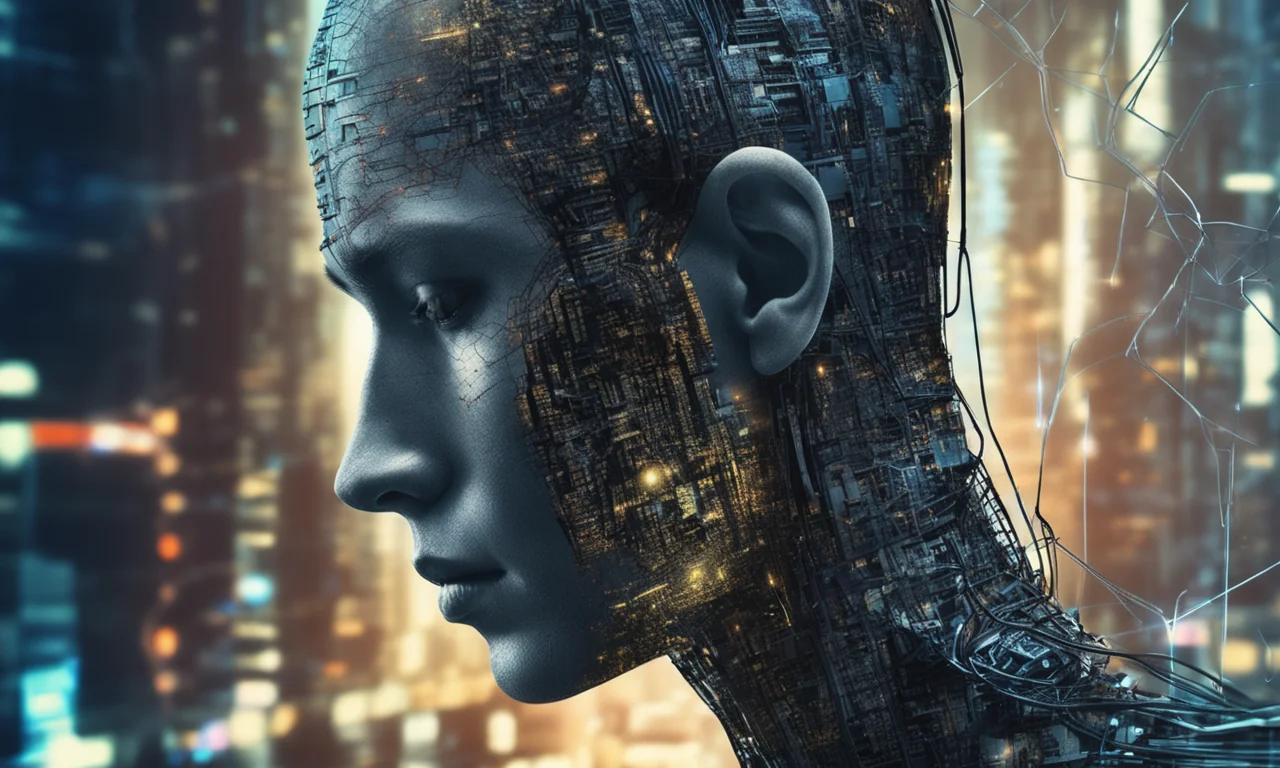
AI Adoption Faces Growing Resistance and Ethical Debate in Education
The rising opposition to artificial intelligence signals urgent calls for values-driven integration and oversight.
Today's Bluesky discussions on artificial intelligence reveal a restless tension between technological progress and the enduring human need for agency, ethics, and authenticity. As decentralized communities grapple with the expanding presence of AI—from education and chip design to photography and satire—the dominant narrative is less about inevitable automation and more about the contested boundaries of control, trust, and creativity.
Human Resistance and AI Integration: Ethics, Agency, and Dialogue
The pushback against AI in higher education is not merely a fringe reaction but a growing signal from students, with recent insights highlighting that up to 23% actively avoid using AI, and 42% oppose its role in assessed academic work. The analysis from Dr Aisling Tierney argues that this resistance should prompt a “values-based dialogue” rather than an imposition of new tools, emphasizing the need for educators to listen and adapt.
"Student rejection of AI is presented as a meaningful pedagogic signal, inviting educators to slow down, listen carefully to values‑based concerns, and integrate AI through dialogue rather than enforcement."- @irishashyt.bsky.social (17 points)
Meanwhile, satirical perspectives like “When Unstable AI Meets the World” underscore anxieties about cognition, ethics, and continuity—reminding us that the real challenge is not just technical, but philosophical and societal. Community events such as #BoomerTech at Santa Fe Public Library offer a grassroots model of cross-generational learning, where teens advise older users on leveraging AI for everyday tasks, counterbalancing fears with practical empowerment.
"Seeing as how a recent study showed that boomers and genz are technically at the same level tech-wise, this is amusing. The blind leading the blind so to speak. And a.i. is not here to save us, just sayin'"- @fredricksamphire.bsky.social (2 points)
AI's Impact: Automation, Security, and Creativity
From the lens of creative fields, there is skepticism about AI's capacity to replace authentic human expression. Robbie Quinn's assertion on photography crystallizes this: if the arts remain anchored to genuine human experience, AI can never supplant them, regardless of its technical prowess. This viewpoint resonates as AI continues its march into domains once thought immune to automation.
"Artificial Intelligence will never supplant photography or any of the arts really if what we care about remains relevant to the human experiences, not the experience of commodity."- @kosmasacco (12 points)
Yet the technical landscape is evolving rapidly. Reports from Artificial Intelligence News and BigEarthData.ai detail Sony's AI-powered robot Ace, which now outplays elite amateur table tennis competitors—a vivid symbol of AI's growing competence in physical environments. On a more practical note, Databricks' guide to LLM fine-tuning offers a pathway for engineers and practitioners to tailor AI for specific tasks, emphasizing data quality and iterative evaluation as critical success factors. The autonomous design of a RISC-V CPU core by Verkor.io's agentic AI, as described in IEEE Spectrum coverage, further demonstrates how AI is beginning to streamline even the most complex engineering workflows.
Security and Oversight: AI's Double-Edged Sword
The darker side of AI's accessibility is surfacing in cybersecurity, where AI tools are enabling less-skilled hackers to conduct sophisticated attacks. The troubling account of North Korean cybercriminals using AI to broaden their reach, as documented in Wired, signals a shift: AI isn't inventing new threats, but it is democratizing the ability to exploit vulnerabilities, making defense ever more challenging.
"AI tools are not creating entirely new hacking abilities, but are assisting with multiple stages of attacks—from vulnerability research to malware deployment."- @knowentry.com (5 points)
Enterprise solutions are scrambling to keep pace. Google's Chrome Enterprise update integrates AI-powered workflows while reinforcing IT controls, aiming to mitigate the risks of “Shadow AI” through enhanced visibility and security features. These developments reflect a growing recognition that AI's utility must be balanced by vigilant oversight, whether in creative work, infrastructure, or everyday digital life.
Journalistic duty means questioning all popular consensus. - Alex Prescott